
Skip to contentSkip to left sidebar Skip to footer

News

China’s Key Political Season Kicks off, Pooling Strength for Modernization Drive

— This year marks the 100th anniversary of the founding of the Communist Party of China, as well as the starting point on a new journey to fully building a modern socialist China


— Premier Li Keqiang is expected to deliver a government work report, which will be closely watched as China has emerged among the first countries to restore economic growth.


— This year’s two sessions are expected to garner more attention from home and abroad as lawmakers will deliberate a blueprint for China’s development in the next five to 15 years.


— Topics including high-quality economic development, sci-tech innovation, rural vitalization, eco-protection and “dual circulation” development paradigm will draw much attention.


— The two sessions returning to its traditional March schedule is an embodiment of China’s success in effectively containing the COVID-19 epidemic.


China’s top political advisory body started its annual session Thursday in Beijing, kicking off the country’s major political season of the year that will pool the strength for fully building a modern socialist country.


Chinese President Xi Jinping and other Chinese leaders attended the opening meeting of the session at the Great Hall of the People.
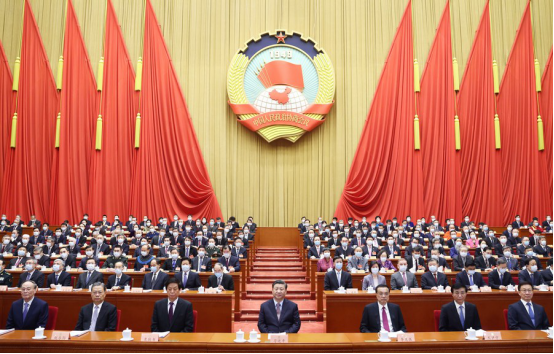
 

Chinese President Xi Jinping and other Chinese leaders attend the opening meeting of the fourth session of the 13th National Committee of the Chinese People’s Political Consultative Conference at the Great Hall of the People in Beijing, March 4, 2021. (Xinhua/Ju Peng)


“This year marks the 100th anniversary of the founding of the Communist Party of China (CPC), as well as the starting point on a new journey to fully building a modern socialist China,” Wang Yang, chairman of the National Committee of the Chinese People’s Political Consultative Conference (CPPCC), told a gathering of more than 2,000 political advisors.


Wang called on political advisors to devote their wisdom and strength to the construction of a modern socialist country.


The National People’s Congress (NPC), China’s top legislature, will begin its annual session on Friday. The dual meetings, also known as the “two sessions,” will set the general national agenda for the whole year and beyond.


Premier Li Keqiang is expected to deliver a government work report, which will be closely watched as China has emerged among the first countries to effectively contain the COVID-19 pandemic, reopen the economy safely, and restore economic growth. The country’s development goals and plan for 2021 are expected to be unveiled in the report.


China’s GDP grew 2.3 percent year on year to hit 101.6 trillion yuan (about 15.7 trillion U.S. dollars) in 2020.
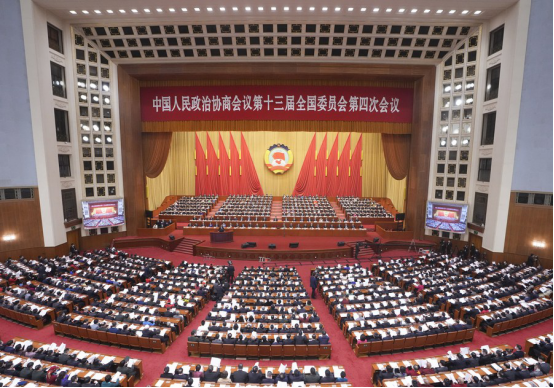
 

The fourth session of the 13th National Committee of the Chinese People’s Political Consultative Conference opens at the Great Hall of the People in Beijing, March 4, 2021. (Xinhua/Xing Guangli)


Zhang Liqun, a research fellow with the Development Research Center of the State Council, said China’s economy is resilient, has potential and will maintain sustained growth in 2021.


Zhang, however, noted that the primary goal of economic development is not to seek a nice-looking GDP figure but to raise the quality of the growth and ensure people’s well-being.


This year’s two sessions are expected to garner more attention from home and abroad as lawmakers will deliberate a blueprint for China’s development in the next five to 15 years — the draft outline of the 14th Five-Year Plan (2021-2025) and the long-range objectives through the year 2035.


“This year’s two sessions do not just serve for the work in 2021, but also the goals and tasks set by the 14th Five-Year Plan. We must fulfill the great mission of our times,” said Bai Chongen, a CPPCC National Committee member and dean of the School of Economics and Management at Tsinghua University.


The draft outline will be under the spotlight for its comprehensive and targeted measures echoing China’s new development philosophy, said Xin Ming, a professor at the Party School of the CPC Central Committee (National Academy of Governance).
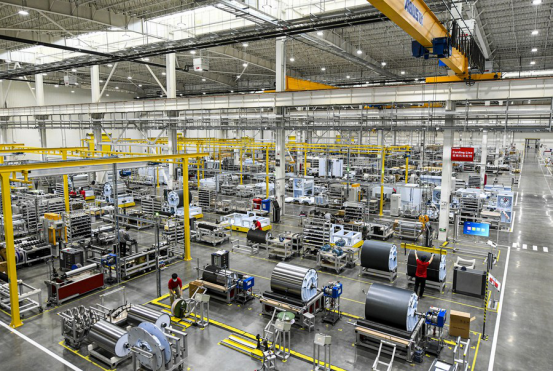
 

Workers are busy at the factory of Zhuolang Intelligent Machinery Co., Ltd. in Urumqi, northwest China’s Xinjiang Uygur Autonomous Region, Oct. 22, 2020. (Xinhua/Wang Fei)


Topics including high-quality economic development, sci-tech innovation, rural vitalization and eco-protection will also draw much attention, Xin said, adding that “dual circulation” development paradigm will be another highlight, in which domestic and overseas markets reinforce each other, with the domestic market as the mainstay.


The 14th Five-Year Plan will further clarify how China will implement the dual circulation strategy and achieve high-quality development, observers say, noting that unleashing domestic demand is crucial to driving China’s growth, but this new development paradigm does not mean China will backpedal on its opening-up drive.


China’s pursuit of self-reliance “is never to close its doors but to build a new development paradigm based on wider and higher-level opening-up,” explained Wang Yiming, a member of the CPPCC National Committee.
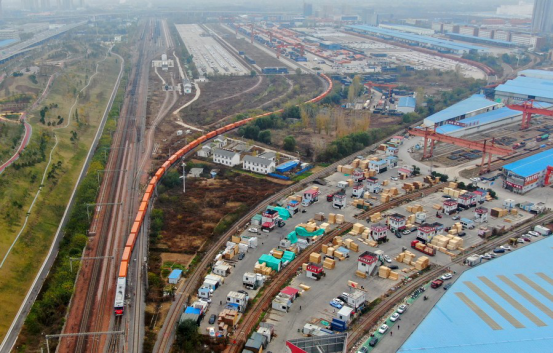
 

Photo shows a China-Europe freight train bound for Helsinki, Finland, departing from Putian Station of Zhengzhou, central China’s Henan Province, Nov. 20, 2020. (Xinhua/Hao Yuan)


During the past year, China had actively cooperated with other countries and regions. It signed the Regional Comprehensive Economic Partnership (RCEP) agreement in November and completed investment agreement negotiations with the European Union in December.


“China’s economy has been deeply integrated into the global economy. As China enters the new stage of development, its ties with the world economy will get even closer,” said Ji Zhiye, former head of China Institutes of Contemporary International Relations who is also a member of the CPPCC National Committee. Ji said the international capitals are optimistic about the Chinese market thanks to the country’s business environment and economic resilience.


The two sessions returning to its traditional March schedule is an embodiment of China’s success in effectively containing the COVID-19 epidemic. The arrangement reconfirms that China’s political, economic and social life is returning to normal, injecting confidence into the world amid the fight against the virus.


Zhang Wenhong, head of the Center for Infectious Diseases at the Shanghai-based Huashan Hospital of Fudan University, said he is hopeful that China will not have any major COVID-19 resurgence this year thanks to its anti-epidemic experience and strong control measures.


Promoting vaccination across the country is the focus of the next stage of epidemic control, according to Zhang, who also heads Shanghai’s COVID-19 clinical expert team. As of the end of February, more than 52 million doses of COVID-19 vaccines had been administered across China.


The world today is caught between a pandemic of the century and momentous changes never seen over the past one hundred years, bringing about many risks and challenges for China on its way ahead.
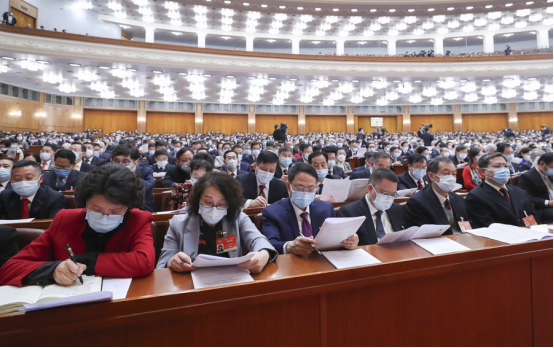
 

Members of the 13th National Committee of the Chinese People’s Political Consultative Conference attend the opening meeting of the fourth session of the 13th CPPCC National Committee at the Great Hall of the People in Beijing, March 4, 2021. (Xinhua/Wang Ye)


China’s nationwide unity is the most solid support for overcoming all kinds of difficulties, and the two sessions are an important platform to pool the country’s strength, said Luo Jie, an NPC deputy and head of the Taihe Hospital in Shiyan, central China’s Hubei Province.


Embarking on the new journey, this year’s two sessions will unite the people to concertedly strive toward a brighter future with great opportunities, said another NPC deputy Cui Genliang.

http://www.wuhu.gov.cn/English/News/29957611.html

China to Fully Advance Rural Vitalization, Facilitate Modernization of Agriculture, Rural Areas

BEIJING — China unveiled its “No 1 central document” for 2021 on Feb 21, stressing the efforts to comprehensively push forward rural vitalization and accelerate the modernization of agriculture and rural areas.


As the first policy statement released by China’s central authorities each year, the document is seen as an indicator of policy priorities. Work on agriculture and rural areas has been high on the agenda for 18 consecutive years since 2004.


During the 14th Five-Year Plan period (2021-2025), the Communist Party of China will regard work concerning agriculture, rural areas and farmers as its top priority, said the


“China will make the comprehensive advancement of rural vitalization a major task in realizing the great rejuvenation of the Chinese nation, and will speed up the modernization of agriculture and the countryside with the efforts of the whole Party and society,” according to the


The document clearly lists the targets and tasks concerning agriculture and rural areas for 2021, as well as a broader vision for the period up to 2025.


This year, the country will keep its sown areas stable, with the grain output to exceed 650 billion kilograms, further improve the quality of agricultural products and food safety, and ensure that the growth of farmers’ incomes outpaces that of urban residents, said the


The country will also start implementing the plan on the modernization of agriculture and the countryside, and further promote reforms in rural areas.


By 2025, China will see substantial progress in the modernization of agriculture and the countryside, with achievements seen for a more solid agricultural foundation, a narrower income gap between rural and urban residents, and basically realizing agricultural modernization where conditions permit, said the


China will set a five-year transition period for counties that have shaken off poverty and gradually shift the policy focus from poverty alleviation toward comprehensively promoting rural vitalization.


The country will continue to consolidate poverty alleviation outcomes, promote rural vitalization in areas that have shaken off poverty, and strengthen assistance for low-income rural residents on a regular basis, said the


As for agricultural modernization, the document stresses the country’s ability to ensure the supply of grain and major agricultural products, including stabilizing the sown area of grain and improving the yield per unit area, accelerating the building of a modern breeding system, promoting green and healthy aquaculture, and optimizing the trade of agricultural products.


The protection, development and utilization of agricultural germplasm resources should be strengthened and the implementation of major scientific and technological projects in agricultural biological breeding should be accelerated.


The document emphasizes that the country must retain a “red line” of 1.8 billion mu (120 million hectares) of arable land. The construction of 100 million mu of high-standard farmland with high and stable yields regardless of drought and flood will be complete this year.


Efforts should also be made to strengthen the support provided to modern agriculture by science, technology and equipment, to establish agricultural modernization demonstration zones, with the total number to reach about 500 by 2025, and to advance the green development of agriculture, according to the


China will vigorously implement an action plan for rural construction, setting targets for better rural public infrastructure and basic public services, stronger rural consumption, and faster integrated urban-rural development within counties, among others, according to the


The document also outlines measures to strengthen the Party’s overall leadership over the work concerning agriculture, rural areas and farmers.

http://www.wuhu.gov.cn/English/News/29837571.html

26 Projects of Jiujiang District Were Signed in the First Quarter

 On the afternoon of February 21st, Jiujiang District held a centralized signing ceremony of the first quarter in 2021 in the form of online and offline, and 26 projects were signed.  


The total investment of the contracted projects is 8.79 billion yuan, including 4 projects of more than 1 billion yuan (including 1 billion yuan). Among the 26 projects, there are 9 robotics projects, 8 industrial projects, 4 cultural and tourism projects, 2 big data projects, 2 e-commercial projects and 1 agricultural project.


Director of Jiujiang District introduced that the centralized signing ceremony is a reflection of the area to adhere to the principle of focusing on projects as well as an important measure open the “14th Five Year Plan. The area has always adheres to the “double recruitment and double lead” as the principle and constantly been devoted to provide favorable environment and good service, which makes Jiujiang a favored land for investment and talent agglomeration. By the end of the 13th Five Year Plan”, the GDP of the region had exceeded 50 billion yuan, and the assessment of private economy ranked first and second in the first-class counties and districts of the province for four consecutive years. In 2020, the economic operation assessment of the district ranked the second in Wuhu, and the robot individual assessment ranked the first in the province.

 Translated by Yuan Mengwen from Foreign Affairs Office of Wuhu Municipal People’s Government

http://www.wuhu.gov.cn/English/News/29837471.html

Staggered Return to New Semester for China University Students

BEIJING — Many universities in China have decided to stagger the start of the new semester in an effort to minimize the risk of coronavirus transmission.


The University of International Business and Economics in Beijing announced Thursday that it will delay in-person classes for the new semester after the winter break.


According to the announcement, online classes will start on March 1 and continue for about two weeks. Students will stagger their return to campus between March 16 and March 21 and offline classes will resume on March 22.


Renmin University of China and Peking University have also postponed the new semester by one to two weeks.


Classes will start as planned at Tsinghua University, which is expected to welcome some 18,000 return students over three days from Friday. The university has arranged shuttle buses to pick up the students and two mass testings for COVID-19 will be conducted on Feb 27 and March 6.


Similar arrangements have also been made by universities in other parts of the country, with a variety of COVID-19 prevention and control measures.


Wuhan University in Central China’s Hubei province and Anhui Normal University in East China’s Anhui province have staggered the opening dates of the new semester for undergraduate and graduate students in different grades.


Students at Wuhan University are required to register with the university before returning to campus. Students from low-risk areas must present a green health code to apply for permission to get back to school while those from middle-or-high risk areas should stay put until the warning level for COVID-19 drops to low-risk. These students should also have a negative nucleic acid test result within seven days when applying to go back.


The Chinese mainland reported no new locally transmitted COVID-19 cases on Wednesday, the National Health Commission said Thursday.


No new locally transmitted COVID-19 cases have been reported for three consecutive days since Monday, according to the commission.

http://www.wuhu.gov.cn/English/News/29837531.html

China Reports Consumption Growth During Lunar New Year Holiday

BEIJING — The consumer spending during the Chinese Lunar New Year holiday surged noticeably, according to the latest statistics from the Ministry of Commerce (MOC).


The combined sales of retail and catering enterprises in China rose 28.7 percent year on year to 821 billion yuan (about 127.5 billion U.S. dollars) during the Spring Festival golden week, data from the MOC showed.


China’s online sales exceeded 122 billion yuan during the same period, with online catering sales surging 135 percent compared with the Spring Festival holiday last year as more Chinese ordered ready-to-eat meals through e-commerce or online food delivery platforms.


Sales of products related to Lunar New Year’s Eve dinners increased by 54.9 percent year on year during the holiday, said the MOC.


The Spring Festival, or the Chinese Lunar New Year, is an important occasion for family reunions, which falls on Feb. 12 this year, and many places across China have encouraged residents and migrant workers to stay put for the festival to reduce the flow of personnel and curb the spread of the COVID-19 epidemic.

http://www.wuhu.gov.cn/English/News/29837511.html

Municipal Leaders Investigate Key Industrial Enterprises

On February 8th, Vice Mayor He Dong led a team to visit key industrial enterprises Wuhu to carry out research on the promotion of intelligent manufacturing capacity of industrial enterprises in the city, the stabilization of post and retention of workers during the Spring Festival of 2021, and the assistance of “one enterprise, one group and one policy”.


He Dong and his delegation successively came to the laboratories and production workshops of Wuhu Lion Automobile Technology Co., Ltd and Yuchai United Power Co., Ltd. Through field visits and seminars, they had a detailed understanding of the production and operation dynamics and development trend of the enterprises, analyzed the existing problems and discussed the solutions. At the same time, they provided on-site guidance on job stability, epidemic prevention and control during the festival.


He Dong pointed out that enterprises should adhere to innovation-driven development, strengthen the leadership of science and technology, make breakthroughs in core technologies and seize the market opportunities. It is necessary to accelerate the transformation and upgrading of digitalization and intelligence, enhance the competitiveness of the industrial chain, seize the opportunity in high-quality development, and make contributions to building Wuhu into a “Smart Manufacturing City”.

Translated by Yuan Mengwen from Foreign Affairs Office of Wuhu Municipal People’s Government

http://www.wuhu.gov.cn/English/News/29837381.html

West Square of Wuhu Railway Station Winning Public Acclaim

    Yesterday morning, the reporter came to Wuhu Railway Station from Beijing Road and walked into the West Square to see that all the roads were paved with brand-new asphalt, with signs pointing to bus garage entrance, private vehicle entrance and taxi entrance respectively. Drivers who came to the West Square for the first time could know clearly which road they should take. Later, the reporter walked through the West Square where the trees were tall and straight and shrubs were planted in the flower beds. On the north side of the West Square, passengers can conveniently transfer between buses and high-speed trains while experiencing the attractive bus hub and railway station.

    “The West Square is not only eye-catching, but also really convenient,  said Mr. Fan, ready to take a train through the Square, “It is very close to the downtown area, and several buses are available to take us to Wuhu Railway Station. Usually, it only costs 7 yuan or so by taxi from near Zhongshan Road Pedestrian Street.” Although it was possible to enter the station from the West Square some time ago, it is now pleasant to see that the Square is surrounded by green plants and lanes are well planned and constructed as it has been officially put into use. Mr Lin, a taxi driver who just sent someone to Wuhu Railway Station, said that the scientific lane design of the West Square makes it more convenient to pick up and drop off passengers.

    It is reported that the West Square is mainly rebuilt on the site of the previous railway station square, covering an area of about 110 mu. The total construction area is about 49,000 square meters, including 4,800 square meters above the ground and some 44,000 square meters underground. The main facilities of the West Square include the entrance platform, bus parking lot and bus dispatching room, 2 non-motor vehicle parking lots, the tourist coach parking lot in the northeast corner, the private vehicle parking lot in the southeast corner, 3 public toilets and the U-shaped entrance. The open area on the first floor underground has been equipped with the main corridor and sunken squares on both sides, the exit, taxi waiting area and parking lot, two public toilets, etc.

Translated by Wang Mengxiao from Foreign Affairs Office of Wuhu Municipal People’s Government

http://www.wuhu.gov.cn/English/News/29837301.html

Wuhu’s Cross-border E-commerce Transactions Hit 1.839 Billion Yuan in 2020, Ranking Second in the Province

It is learned from Wuhu Municipal Commerce Bureau that in the past year, the city seized the strategic opportunity of the State Council’s approval of the establishment of China (Wuhu) Integrated Pilot Zone for Cross-border E-commerce and the provincial government’s approval of the Implementation Plan for the construction of Wuhu Integrated Pilot Zone, and took multiple measures to promote the new foreign trade mode of cross-border e-commerce to a new level of development. In 2020, the city’s cross-border e-commerce transactions reached 1.839 billion yuan, ranking second in the province.


In 2020, the city focused on attracting investment from leading enterprises in the cross-border e-commerce industry, including Pinduoduo, Cainiao, China Ningbo International Cooperation Co.,Ltd, 58 Enterprise Service and so on. The cross-border e-commerce transactions of Wuhu Muchen E-commerce Co., Ltd. ranked first in the province, and the cross-border e-commerce export volume of Wuhu U-Play Corporation exceeded 84 million yuan in 2020.


    Last year, the city set up an online public service platform for cross-border e-commerce and started to build supporting facilities such as Cross-border E-commerce Supervision Center and Bonded Warehouse. Cross-border e-commerce enterprises can utilize public overseas warehouses to expand their businesses. Up to now, 8 enterprises in the city have established 27 oversea s warehouses. In addition, we have built four offline cross-border e-commerce industrial parks, two of which have been rated as provincial cross-border e-commerce industrial parks (a total of nine in the province).


    The city has made cross-border e-commerce one of the six major industries in Wuhu Area of Anhui Pilot Free Trade Zone, planned the construction of Cross-border Pet Industrial Park, and actively developed bonded online shopping and other businesses. The Municipal Market Regulation Administration has formulated 20 measures to promote the sound development of cross-border e-commerce, and established a system of chief business service officers for cross-border e-commerce to improve service efficiency.


Translated by Wang Mengxiao from Foreign Affairs Office of Wuhu Municipal Peoples Government

http://www.wuhu.gov.cn/English/News/29768171.html

The 4th Session of the 13th Anhui Provincial People’s Congress Closes

    The 4th Session of the 13th Anhui Provincial People’s Congress held its closing meeting in Hefei, capital of East China’s Anhui province, on Monday.


    Li Jinbin, Party chief of the province and chairman of the Standing Committee of the Anhui Provincial Peoples Congress, delivered a speech at the meeting.


    Shen Suli, vice chairman of the Standing Committee of the Anhui Provincial Peoples Congress, chaired the closing meeting.


    Wang Qingxian was elected governor of the province at the meeting.


    Meanwhile, Wei Xiaoming was elected vice chairman of the Standing Committee of the 13th Anhui Provincial Peoples Congress. Bai Jinming was elected secretary general of the Standing Committee of the 13th Anhui Provincial Peoples Congress. Wang Yingchun, Zhao Xinqun, Gao Li and Guo Decheng were elected members of the Standing Committee of the 13th Anhui Provincial Peoples Congress. Chen Wu was elected chief procurator of the Anhui Provincial Peoples Procuratorate.


    The provincial legislature approved a resolution on the annual government work report, a resolution on the provinces 14th Five-Year Plan (2021-2025) for National Economic and Social Development and the Long-Range Objectives through the Year 2035, a resolution on the provinces implementation of the annual plan on economic and social development in 2020 and a draft plan for 2021, and a resolution on the implementation of the budgets in 2020 and the draft budgets for 2021.

    
Resolutions on the work reports of the standing committee of the legislature, the Anhui Provincial High People’s Court, and the Anhui Provincial Peoples Procuratorate were also passed at the closing meeting.

http://www.wuhu.gov.cn/English/News/29767631.html

187 Old Urban Communities in Wuhu City to Be Renovated This Year

It’s learned from the Municipal Housing and Urban-Rural Development Bureau that 187 old urban communities in Wuhu City , covering 29,342 households with a construction area of 2.8883 million square meters, will be renovated this year. The number of to-be-renovated old communities in the city ranks first in Anhui province, and the renovation area as well as the number of households involved rank second in the province.


The renovation of old communities is a pro-people project that delivers real benefits to them. From 2019 to 2021, the city plans to renovate about 2,600 old  communities, including those that affect residents’ daily lives or those residents of which have strong willingness to renovate, such as communities that have been built for a long time with insufficient supporting facilities, poor living surroundings and management, etc. We will effectively improve outdated facilities and equipment, incomplete functional supporting facilities and poor living surroundings in old communities. In the process of renovation, we do our utmost to implement the project and mobilize the masses to actively support us, sticking to the principle of all for the masses and relying on the masses. For example, we publicize the preliminary design plan for the renovation of old communities, solicit opinions from different people, and invite experts to review to improve the renovation plan.


The key to building up weak links concerning the functions of old communities lies in the post-project management and maintenance. On the one hand, we have clearly defined the responsibilities of various departments, jointly promoted the renovation of old urban communities into plots, carried out a thorough registration of illegal car parking, occupation, piling of trash and construction in those communities, and cleared the “obstacles” in the process of renovating old communities. On the other hand, we implement the Four-sphere Integrated Management Mechanism involving the Communist Party organizations in communities, neighborhood committees, proprietors’ committees and property service enterprises, set up property mediation centers, actively promote the “red property” management, allow the majority of proprietors to vigorously participate in community management, and ensure the effectiveness of the renovation of old communities.


Translated by Wang Mengxiao from Foreign Affairs Office of Wuhu Municipal Peoples Government

http://www.wuhu.gov.cn/English/News/29681821.html