Skip to contentSkip to left sidebar Skip to footer

Wuhu News

Key Projects Meeting on Building People-centered City Held in Wuhu

On February 2, key projects meeting on building a people-centered city was held in Wuhu, and Ningbo, Deputy Secretary of the Municipal Party Committee and Mayor, attended the meeting and delivered a speech. Vice Mayor Xiang Jihui presided over the meeting.

The meeting heard reports on the completion of the key projects to build a people-centered city of Wuhu in 2022, and made plans for the “four promoting” task in 2023. Relevant units shall report relevant work conditions respectively.

Ningbo pointed out that the work has made remarkable progress on building a people-centered city in Wuhu, and a number of key projects under construction are progressing smoothly according to the schedule, further improving the city’s appearance and reputation. However, we should also be soberly aware that there are still shortcomings in all our work. We should adhere to the problem-oriented and self-pressure approach to promote the building of a people-centered city in Wuhu to a new height.

Ningbo emphasized that the building a people-centered city is a solemn commitment to the people of Wuhu as well as an important starting point to improve the quality and level of Wuhu. All departments and units should continue to work together to overcome difficulties and ensure that all work is completed on time, in good quality and in good quantity. We should manage the whole process of projects under construction, effectively improving management and ensuring high-quality completion. It is necessary to plan projects ahead of schedule, and simultaneously plan project construction funds. We need to conduct in-depth and detailed preliminary work on projects, strengthen support for key factors, and timely resolve the blocking points in the process of the projects. We should strengthen publicity and guidance, make good use of new media and other diversified means and fully mobilize the enthusiasm and initiative of the masses to participate in the building of a people-centered city, continuously enhancing their sense of gain and happiness.

Translated by Yuan Mengwen from Foreign Affairs Office of Wuhu Municipal People’s Government

https://www.wuhu.gov.cn/English/News/37275871.html

Import & Export Value Reached 53.2 Billion Yuan in Wuhu FTZ Last Year

A few days ago, it was learned from the Administration of Wuhu Area of China (Anhui) Pilot Free Trade Zone that in 2022, steady progress was seen in the economic development of Wuhu Area, and the institutional innovation presented robust momentum. Wuhu Area has achieved remarkable results in terms of business attraction and talent recruitment, and improved quality and efficiency in the construction of open platforms. In addition, it has continued to deepen the reform of the examination and approval system. Last year, Wuhu Area contributed about 60% of the city’s import and export volume, 41% of foreign direct investment and 7% of new market entities.

In 2022, Wuhu Area achieved an import and export value of 53.2 billion yuan, a year-on-year increase of 38%. The number of newly registered companies was 2,449, a year-on-year increase of 30.7%. The actual utilization of foreign capital reached 100.86 million US dollars, and the growth rate of main economic indicators ranks first in three pilot free trade zones of Anhui province. Meanwhile, Wuhu Area gained 47 institutional innovations, including 5 national institutional innovations. One case was selected as one of the top ten reform cases in the province, three cases were selected as “Top Ten Institutional Innovation Cases in the Second Anniversary” and 24 cases were selected as provincial institutional innovation achievements. At present, 98 percent of the 100 pilot reform projects in Wuhu Area have been implemented, and 83 projects have made achievements.

In terms of project construction, in 2022, Wuhu Comprehensive Bonded Area implemented 21 signed projects, introduced Lalamove Digital Logistics Settlement Center in East China Region, and issued the first “network freight” road transport business license. A series of projects such as Xinyi International Trade Headquarters were signed to cultivate the advantages of production and export clusters in the whole industrial chain of glass and photovoltaic industries. In addition, an export base for complete sets of automobile parts was built, providing support for Chery to export 27,300 new vehicles and KD parts, with an export value of 2.46 billion yuan.

Wuhu Area has also taken the lead in promoting the reform of relatively centralized administrative licensing rights in Anhui province. The examination and approval of all empowerment items has been carried out independently, and “one seal for examination and approval” has been realized. The first integrated window of “non-differentiated acceptance” in the province set up in the comprehensive service hall of Wuhu Area, realizing “one-stop” processing of 382 administrative approval items.

Translated by Wang Mengxiao from Foreign Affairs Office of Wuhu Municipal People’s Government

https://www.wuhu.gov.cn/English/News/37275011.html

Wuhu-Xuanzhou Airport Reached An Annual Passenger Throughput of 387.2 Thousand in 2022

The reporter recently learned from Wuhu-Xuanzhou Airport Construction Investment Co., LTD. that in 2022, WuhuXuanzhou Airport has achieved a total passenger throughput of 387,200.

It is reported that Wuhu-Xuanzhou Airport has a cargo and mail throughput of 5,029.61 tons in 2022, with 6,496 takeoffs and landings by transport aviation and 6,393 by general aviation, which ranks the first in the whole province. In 2022, Wuhu-Xuanzhou Airport has successively added several routes to Fuzhou, Guiyang, Hohhot, Changsha, Xi’an, Guilin, Dalian, Xishuangbanna and Ordos, and ushered in the first landing of “Wuhu Takeoff” aircraft, the smooth arrival of the first resident aircraft of Huaxia Airlines, and opening of the first full-cargo aircraft route of JD.

According to the airline network planning and layout of “connecting Beijing, Tianjin and Hebei in the north, Pearl River Delta and key urban agglomeration in the west”, WuhuXuanzhou Airport has opened 34 passenger routes to 29 cities including Beijing, Guangzhou, Shenzhen, Xi ‘an, Chengdu, Chongqing, Sanya, Haikou, Xiamen, Guiyang, Guilin and Xishuangbanna. Low-altitude sightseeing routes to Huangshan, Jiande, Shangrao and other palces have been opened and the airport’s accessibility and service level continue to rise.

Translated by Yuan Mengwen from Foreign Affairs Office of Wuhu Municipal People’s Government

https://www.wuhu.gov.cn/English/News/36975071.html

Promote Economic Restructuring, Empower the Reform of State-owned Enterprises & Assets

Since last year, the state-owned enterprises (SOEs) and assets in Wuhu have shown new impetus by adhering to the new development concept and continuously optimized the economic layout and structure. According to statistics, by the end of the third quarter of 2022, the economic operation of municipal SOEs had made steady progress. The total assets of SOEs at the municipal level reached 266.7 billion yuan, up 3.52% year-on-year, the total operating income achieved 51.507 billion yuan, up 29.21% year-on-year, and the total profit was 2.138 billion yuan.

In 2022, Wuhu continued implementation of the three-year action plan for SOE reform, and 74 reform tasks have been fully completed. Through promoting the restructuring and integration of SOEs, removing systemic and institutional barriers and revitalizing existing funds, we can inject great momentum into the development of SOEs. With the implementation of a new round of reform and reorganization, the number of SOEs in the city has been reduced from 29 to 11. With a series of measures, such as reorganizing construction investment companies, setting up state-owned capital investment companies, the talent development group and the health-care group in Wuhu, we have fully released the vitality of local SOEs and assets.

In order to improve the quality of development, the city has actively optimized the incremental state-owned assets, accelerated the cultivation of emerging industries via municipal platforms, focused on key areas such as new energy vehicles, intelligent equipment, general aviation and new materials, and promoted the implementation of investment projects in Wuhu. From January to November, 2022, the municipal SOEs implemented 18 investment projects with a total investment of 10.554 billion yuan, of which the top ten emerging industries accounted for 84.4%.

The city also encourages municipal SOEs to set up special R&D reserves and formulate their own R&D reserve system. By the end of the third quarter of last year, the total investment in R&D of municipal SOEs reached 2.02 billion yuan, a year-on-year increase of 65.54%.

Translated by Wang Mengxiao from Foreign Affairs Office of Wuhu Municipal People’s Government

https://www.wuhu.gov.cn/English/News/36962351.html

Li Calls for Stability in Growth, Employment


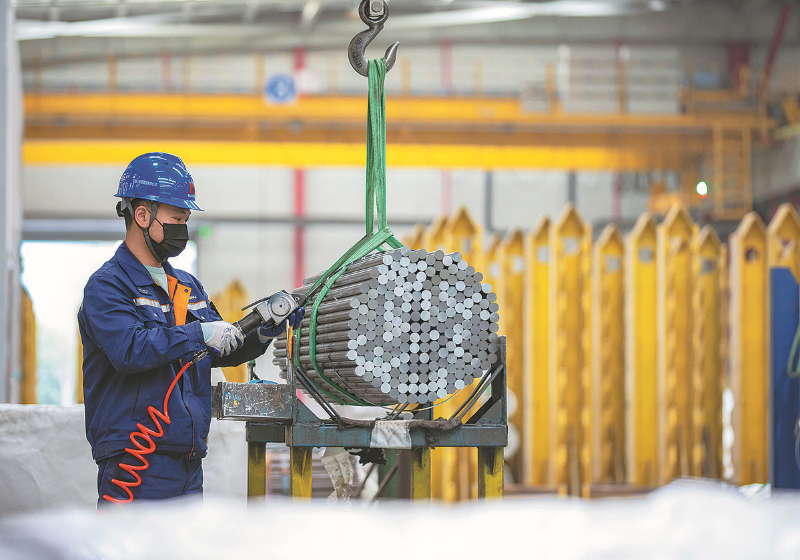
An employee works on the production line of China Baowu in Maanshan, Anhui province. [PHOTO by LUO JISHENG/FOR CHINA DAILY]


Premier Li Keqiang has called for earnest efforts to carry out policies intended to help market entities get out of difficulties, and to stabilize growth, employment and prices in order to ensure that economic operations stay in an appropriate range.

Li made the remarks on Monday during an inspection tour of the State Administration of Market Regulation, according to a statement released on Thursday.

Also on Monday, while visiting the market regulation administration’s China National Intellectual Property Administration, Li heard reports about efforts in the creation, protection and use of intellectual property. He said that protecting intellectual property means protecting innovation and first productive forces.

Li urged the upholding of innovation-driven development, the acceleration of the transfer and use of innovation achievements, and the promotion of industrial upgrading.

When visiting the data analysis center of the market regulation administration, Li learned about the development trend of market entities. He said that in recent years, efforts have been made to stabilize employment through protecting market entities, and continued efforts should be made to develop and increase the number of market players.

Addressing a symposium at the nation’s market regulatory body, Li said that over the years, the nation has adhered to market-oriented reform and continued to deepen the reform to streamline the government, delegate power and improve government services. It has also made efforts to build a market-oriented, law-based and world-class business environment, and has provided the people with greater freedom and convenience to run businesses, he said.

Mass entrepreneurship and innovation have spurred a large number of new industries, new businesses and new models, Li added.

In order to alleviate the difficulties and pressure on market players, the nation has consistently implemented policies such as cutting taxes and fees, which has played a key role in keeping the economy’s performance stable, he said.

Li pointed out that the economy is recovering, but market players, especially small and medium-sized enterprises and self-employed businesses, are encountering greater difficulties.

He called for maintaining policy stability and continuing to implement the policy package for stabilizing the economy and follow-up policies. Fiscal and financial policy instruments that support key projects and equipment upgrading and renovation should generate more concrete gains, he said.

Efforts should also be made to promote the recovery of consumption, help enterprises address difficulties in the supply of raw materials and financing, and strive to step up resumption of work and production after the upcoming Spring Festival holiday, he said.

https://www.wuhu.gov.cn/English/News/36909161.html

Chery Group’s “Carbon Peak and Carbon Neutrality ” Campaign Won the Social Responsibility Award Again

At the beginning of 2023, in the Fourth China Urban Credit Construction Summit Forum — Carbon Road China ESG Practice and Development Theme Forum, Chery’s case of “Building a Green Industrial Chain and Drawing a Blueprint of Chinese Manufacturing Industries “was rated as the leading case for carbon peak and carbon neutrality of ” Xinhua Credit Golden Orchid Cup “. This is the second time Chery’s “carbon peak and carbon neutralitycampaign has been recognized, and it has contributed a model practice scheme for Chinese automobile enterprises to fulfill their social responsibilities.

Chery’s case of “Building a Green Industrial Chain, Drawing the Blueprint of Chinese Manufacturing Industries comprehensively demonstrates how to build safer, more energy efficient and more environmentally friendly vehicles, and to achieve green and low-carbon goals in the whole life cycle and the whole industrial chain through green design, green procurement, green manufacturing, green products, green marketing and recycling. Social, environmental and economic benefits have been comprehensively improved.

Translated by Yuan Mengwen from Foreign Affairs Office of Wuhu Municipal People’s Government

https://www.wuhu.gov.cn/English/News/36975021.html

New Blueprint Promotes Peace, Prosperity

At the 20th National Congress of the Communist Party of China in October, it was affirmed that China, under the leadership of the CPC, has established the foundation for building a “modern socialist country” by achieving a “moderately prosperous society in all respects”.

By introducing a new development philosophy and creating a new pattern for development, China has waged a critical battle against poverty and succeeded in eradicating extreme poverty in the country 10 years earlier than the 2030 target of the United Nations’ Sustainable Development Goals.

Since the worldwide spread of the novel coronavirus, China has given priority to saving human lives, and in tandem with the extensive fight against the virus inside China, it has provided widespread assistance to other countries in this tough fight.

Also, over the past decade, China has made great contributions to the development of the infrastructure of less-developed countries, contributing to the economic growth of countries and the prosperity of international trade with the Belt and Road Initiative.

This valuable public good has led to the formation of extensive cooperation between China and developing countries, and it has provided the basis for cooperation between China and countries participating in the BRI.

Today, China is pursuing modernization and high-quality development so that its huge population of 1.4 billion people can enjoy better lives, with prosperity for all and in harmony with nature.

China, under the leadership of the CPC, has put peace, development, cooperation and common interests at the forefront of its work, unlike the path taken by other major powers throughout history. In addition, based on the missions and tasks set by President Xi Jinping, who also is general secretary of the CPC Central Committee, it will contribute more to world peace and global development through its own development.

China’s plan to modernize all aspects of Chinese people’s lives, from economy, industry and agriculture to education, culture and politics, can be a good model for all developing countries.

A plan that aims to create a better and happier life for people can be a model of good governance for all people. This philosophy of development is based on people, and it will surely lead to convergence, peace and prosperity.

Furthermore, paying attention to the environment and stressing the harmonizing of development with nature can control the serious crisis facing humanity that has been caused by the longtime global neglect of the environment.

Today, everyone has come to an understanding that the continuation of the current destructive trends in the world will cause deep crises and catastrophes that will seriously affect the current generation and future generations.

The attention and commitment of the CPC to world peace and the promotion of common interests, along with respect for the sovereignty and territorial integrity of other countries and the serious opposition of the Party to all kinds of hegemonism, the Cold War mentality and interference in the internal affairs of other countries, are the grounds for China to play a strong role in the years to come.

China’s adherence to the Five Principles of Peaceful Coexistence and its commitment to promote a new type of international relations based on deepening and expanding global cooperation through a commitment to equality, openness, cooperation and expanding the convergence of interests with other countries provides a clear perspective of China’s attitude to the issue of international interactions.

The insight of the leadership of the CPC on global peace and development has provided the basis for extensive international cooperation to build a better world for all.

The role of civil societies in promoting this approach and expanding cooperation is very prominent. People-to-people diplomacy, cultural exchanges, social interactions, party cooperation and the cooperation of nongovernmental organizations, along with the diplomatic relations of governments with each other and the interactions of governments within the framework of the UN, can provide the basis for the end of extremism, violence, war and bloodshed and lead humanity to a new direction for development.

Continuing our long-standing cooperation with the CPC and its affiliated organizations, we at the International Foundation for Islamic Development are very pleased that the approach to the development of international exchanges has been approved at the 20th CPC National Congress.

The international foundation believes that the current issues facing humanity, including the environmental crisis, securing access to water, food and energy, overcoming health issues, eradicating poverty, and preventing violence and extremism, cannot be solved by any country on its own, and that to solve these problems, extensive international cooperation and interaction will be required in the framework of multilateralism and mutual respect.

https://www.wuhu.gov.cn/English/News/36908971.html

Wuhu Improved Drug Security in Multiple Respects

Wuhu Municipal Medical Insurance Bureau has improved drug security in multiple respects such as policy implementation, online procurement, and price supervision to meet people’s drug demand.

Through effectively carrying out the related policies and removing obstacles in the process of national centralized drug procurement, the city has orderly promoted the bulk-buying of each batch of national drugs, and implemented the centralized drug procurement in seven batches as prescribed by the country and the province for two consecutive years, including a total of 399 common drugs. In 2022, the city purchased a total of 236 million yuan of drugs selected from national and provincial collections, saving about 259 million yuan in total and reducing patients financial burden of treatment.

With closed-loop management, we have established the whole process supervision mechanism of online drug procurement. We have issued the Notice on Further Strengthening the Supervision of Online Procurement of Pharmaceutical Consumables, clarified the regulatory responsibilities of medical insurance departments and medical institutions at all levels for online drug procurement, standardized the online catalogue adjustment process, strengthened the daily management of online drug procurement, established and improved the comprehensive regulatory mechanism for online drug consumables procurement in municipal public medical institutions, and realized closed-loop management of the whole process.

We have carried out price monitoring and adjustments of key drugs. We have established and improved the reasonable formation mechanism of drug prices in Wuhu, regularly monitored the prices of key drugs, and timely reported the problems existing in drug price adjustments. The drug price monitoring involves 1,596 products in 2022, effectively promoting the comprehensive standardization of drug price adjustments, and enhancing the drug supervision and guarantee capacity in the city.

Translated by Wang Mengxiao from Foreign Affairs Office of Wuhu Municipal People’s Government

https://www.wuhu.gov.cn/English/News/36962201.html

Economic Watch: Stronger, More Targeted Monetary Support to Accelerate China’s Economic Recovery

BEIJING, Jan. 9 (Xinhua) — China’s prudent monetary policy will be more targeted and effective this year to provide stronger support for the overall recovery and improvement of its economy, according to financial officials and experts.

In a statement released after the latest quarterly meeting of its monetary policy committee, the People’s Bank of China (PBOC), the country’s central bank, has pledged to strengthen its implementation of the prudent monetary policy and provide stronger support for the real economy.

The central bank said it will work to maintain liquidity at a reasonably ample level, maintain effective growth in total credit volume, and ensure that increases in money supply and aggregate financing are generally in step with nominal economic growth.

Liang Si, a researcher at the Bank of China’s research institute, said that considering lingering pressure, the monetary and financial environment for the real economy will remain stable and appropriate this year. He expected M2 and social financing to both maintain double-digit growth.

Newly added social financing, a measurement of funds that individuals and non-financial firms receive from the financial system, came in at nearly 30.5 trillion yuan (about 4.47 trillion U.S. dollars) in the first eleven months of 2022, central bank data shows.

Liang said he believes domestic banks’ loan interest rates will continue to decrease to boost enterprises’ vitality. He noted that the PBOC has pledged to lower corporate financing costs in 2023, and external pressure from the U.S. Fed’s rate hikes is likely to ease.

In addition to ample liquidity and lower rates, China’s monetary policy in 2023 is also expected to be more targeted, with emphasis on key fields and weak links in the economy.

Guo Shuqing, chairman of the China Banking and Insurance Regulatory Commission, has highlighted expanding effective demand and deepening supply-side reform as focuses of the country’s monetary policy in 2023.

Converting the current total income into consumption and investment to the maximum extent possible is the key to faster economic recovery and high-quality growth, and financial services have a lot to offer in the process, Guo said in an interview with Xinhua.

Guo pledged to tilt monetary policy toward private enterprises, with measures to maintain the effective growth of total credit and lower overall financing costs.

Ren Tao, a researcher at China’s National Institution for Finance and Development, said that bank credit will continue to be channeled into modern sectors such as advanced manufacturing and strategic emerging industries, and sectors that facilitate domestic demand, such as the auto and green appliances industries, will attract such funds as well.

Ren said financing demand related to the real estate sector this year will be unlocked to some extent, with specific support to be given to secure the delivery of pre-sold housing, and loans for mergers and acquisitions in the real estate sector will rise.

In his interview, Guo also stressed the need to promote healthy circulation between the real estate and financial sectors.

China will make efforts to ensure the delivery of pre-sold housing, focus on improving the balance sheets of leading real estate developers, and seek to promote the property industry’s transition to new development models, Guo noted.

https://www.wuhu.gov.cn/English/News/36908911.html

Modernization Expected to Benefit World


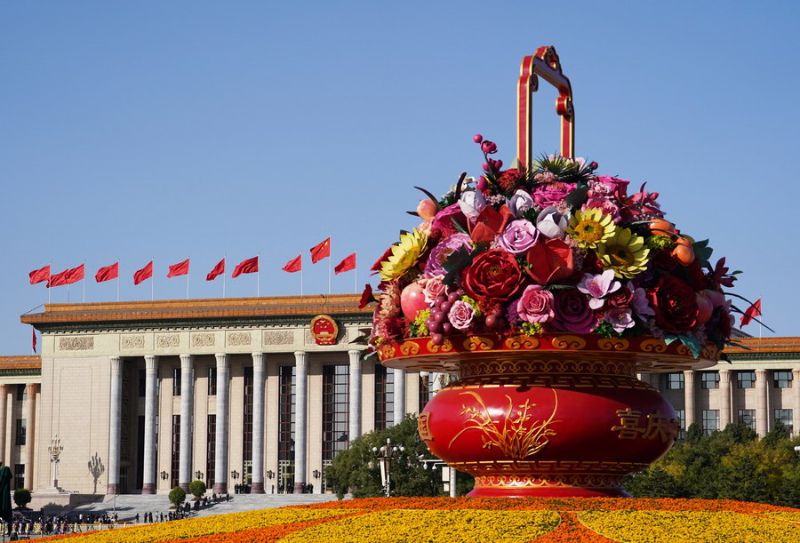
This photo taken on Oct 16, 2022 shows the Great Hall of the People in Beijing, the capital of China. [Photo/Xinhua]


Vision ensures common prosperity for all, pursues peaceful development

China’s broader push for its pathway to modernization has fueled expectations that the nation will bring more opportunities and create a dynamic of growth that will deliver wide-ranging benefits for the world, according to business leaders and analysts.

The Chinese path to modernization, a key vision outlined by Xi Jinping, general secretary of the Communist Party of China Central Committee, in his report to the 20th CPC National Congress, is the modernization of a huge population, and it ensures common prosperity for all and pursues peaceful development.

This path will also entail the promotion of high-standard opening-up, including the high-quality development of the Belt and Road Initiative and broader steps to share its development experience, analysts said.

Raymund Chao, chairman of PwC Asia-Pacific and China, said the vision of the Chinese path to modernization was proposed at a pivotal moment with the international environment becoming increasingly complex and uncertain and global leaders contemplating solutions to the challenges brought about by the COVID-19 pandemic, regional conflicts, and supply chain and trade disruptions.

“The path to ‘Chinese modernization’ and developing China as a ‘great modern socialist country’ by the mid-21st century will have profound implications for economic and social development, both for the world and China, in the coming years,” he said.

To follow this path and attain this goal, he said the nation will expand institutional opening-up with regard to rules, regulations, management and standards, promote high-quality development of the BRI and endeavor to preserve the diversity and stability of the international economic landscape and trade relations.

China’s top leadership reaffirmed its push for the Chinese path to modernization at the annual tone-setting Central Economic Work Conference in December, during which policymakers pledged to make greater efforts to attract more foreign capital, widen market access and further open up the modern services sector.

They also highlighted the nation’s unwavering commitment to join high-standard economic and trade agreements, including the Comprehensive and Progressive Agreement for Trans-Pacific Partnership and the Digital Economy Partnership Agreement.

Xi said in a written speech delivered at the APEC CEO Summit in Bangkok in November that no more than 30 countries, with a total population of less than 1 billion, have achieved industrialization so far. He said that China’s middle-income population will increase to over 800 million in the next 15 years, and promote the sustained growth of China’s supersized market.

Chao said the modernization of China’s 1.4 billion population to promote common prosperity will unleash consumer demand for high-quality goods and services as the nation pushes for the building of a community with a shared future for mankind.

“A modernized China will bring more opportunities and create a dynamic of growth for both the region and the world,” he said. “It is also a strong signal of China further opening up to the world, underscoring the country’s commitment to pursue an open strategy of achieving peaceful and coordinated development for win-win outcomes.”

Ivona Ladjevac, deputy director of Serbia’s Institute of International Politics and Economics, said China’s modernization is inextricably linked with socialist modernization, which contains unique elements making it unlike modernization pursued by any other countries.

“Not for a moment rejecting the fact that it is a long-term process, it was started with the desire that the end result would be a prosperous society based on equity and justice, a society that would not be polarized,” she said.

Ladjevac said that China’s vision for its modernization has been encouraging to other developing countries.

“A commitment to peace, development, cooperation and mutual benefit, along with a firm determination to preserve world peace and development, underlies China’s modernization,” she said.

“Through its realization, China makes a greater contribution to peace and development in the world,” she added.

As part of its broader push to promote global development, China decided last year to upgrade its South-South Cooperation Assistance Fund to a Global Development and South-South Cooperation Fund and add $1 billion to the fund on top of the $3 billion already committed.

In a speech on China’s diplomacy delivered on Dec 25, Wang Yi, who was then foreign minister and is now director of the Office of the Foreign Affairs Commission of the CPC Central Committee, said Beijing will stay committed to a Chinese path to modernization, not only creating a new form of human advancement, but also providing new choices for developing countries.

“We will firmly support developing countries in exploring development paths suited to their national conditions and embarking on a fast track toward modernization at an early date,” he said.

Chea Munyrith, president of the Cambodian Chinese Evolution Researcher Association, said he believes the Chinese path to modernization will entail furthering sharing of China’s expertise in development, including for global poverty reduction and the easing of the global food crisis.

For example, he said that Chinese experts are working with their counterparts from Cambodia on devising a master plan for the development of modern agriculture in his country.

As part of the plan, experts sent by the Foreign Economic Cooperation Center of the Chinese Ministry of Agriculture and Rural Affairs will help the Southeast Asian nation build up its expertise in growth of milled rice, corn, rubber, cassava, bananas, animal production and aquaculture and work toward better food security.

“This is another vivid example that China, after its success in attaining rural development, is sharing its outcomes from development through win-win cooperation with developing economies,” he said.

The Cambodian scholar also underscored the significance of China’s commitment to free trade and sharing its large domestic market with the world, especially developing countries, which will offer strong impetus to the global economic recovery.

Andy Mok, a senior research fellow at the Center for China and Globalization, a Beijing-based think tank, said China’s development is especially important for developing countries because it also provides a successful model that is based on actual experience and “not erroneous beliefs and self-serving ideologies that have led some nations astray”.

“By adhering to a path of peaceful development, China can play a positive role in avoiding or minimizing future conflicts,” he said.

He added that making greater strides in opening up is an inevitable choice for China’s future modernization efforts as opening-up provides domestic benefits for China by giving consumers a wider array of products and services while fostering a more competitive economy that leads to greater efficiency.

“China’s opening-up provides market and investment opportunities for all types of businesses around the world, ranging from Fortune 500 to small and medium-sized enterprises,” he said.

https://www.wuhu.gov.cn/English/News/36908841.html