Skip to contentSkip to left sidebar Skip to footer

News

RCEP Unleashes Chinese Enterprises’ True Potential
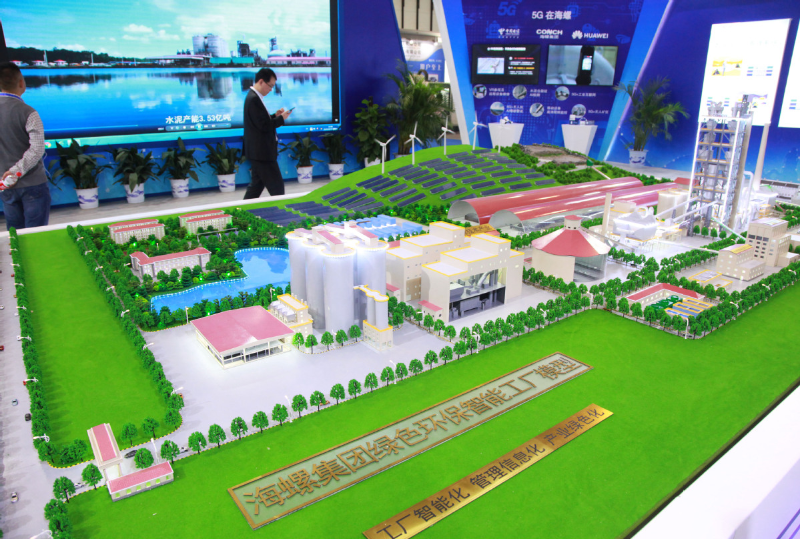

A man passes by the exhibition booth of Anhui Conch Group, a Chinese cement and building materials manufacturer, at the World Intelligent Manufacturing Conference in Nanjing, Jiangsu province. LIU JIANHUA/FOR CHINA DAILY


*

Chinese enterprises are expected to further utilize the potential of the Regional Comprehensive Economic Partnership agreement to upgrade operations and climb up the industrial value chain for high-quality development, according to trade experts and business leaders.

Officially taking effect on Jan 1, the agreement has grouped 15 Asia-Pacific economies including all 10 members of the Association of Southeast Asian Nations to create the world’s largest free-trade bloc, promoting regional economic integration through tariff concessions and other trade and investment liberalization and facilitation measures.

According to Zhou Mi, a senior researcher at the Chinese Academy of International Trade and Economic Cooperation, thanks to the implementation of the RCEP agreement, Chinese enterprises will likely intensify cross-border industrial capacity cooperation with counterparts from other RCEP members, as well as strengthen RCEP market studies to develop products and services in accordance with different market needs.

“China and other RCEP countries already have a high level of cooperation in the manufacturing sector, but Chinese manufacturing enterprises in the past mainly built their presence in the region through exporting products, rather than other ways,” he said.

“The ongoing upgrades of China’s manufacturing industries require a formation of new competitiveness of Chinese enterprises, and to that end, the coordination in market regulation among RCEP members will play an important and positive role that will facilitate Chinese enterprises’ technological advancements and market-oriented innovations,” he added.

According to the rules of the trade pact, nearly 90 percent of tariffs on goods traded within the region will be removed over a period of 20 years. Furthermore, the trade pact allows products to have just 40 percent of their value added within the region to enjoy lower or zero tariffs, which analysts said will accelerate the integration of regional industrial chains.

Wang Cheng, chairman of Anhui Conch Group, a Chinese cement and building materials manufacturer, said at a recent forum organized by the Beijing-based RCEP Industry Cooperation Committee that Anhui Conch plans to invest around 200 billion yuan ($29.82 billion) in the RCEP region within five years, including doubling its investments in RCEP countries outside China to 30 billion yuan.

The company also aims to build a highly efficient supply chain in the region, to facilitate going-global strategies of other Chinese enterprises in high-end sectors such as intelligent manufacturing, new energy and new materials, and environmental protection.

Wu Dazhi, chairman of Guangdong Zhida-Walking New Material Technology Co Ltd, believes the trade pact will propel Chinese enterprises to utilize division of labor to carry out industrial cooperation programs in the region and to pursue a better position in the industrial value chain.

“That is especially important as Chinese enterprises face increasing competition from some neighboring countries in low-end manufacturing sectors, while the tide of protectionism around the world also grows,” Wu said, who is also president of the Guangzhou Leather& Footwear Association.

“Chinese products have a good reputation for their quality, and the fiercer competition in global markets will catalyze the transformation of Chinese enterprises to climb up into higher value-added sectors because those failing to adapt will be squeezed out from the markets,” he said.

According to Wu, although labor costs in China are higher than in some neighboring countries, such as Vietnam, China’s populous pool of high-end talent and skilled workers remain an advantage for Chinese enterprises to upgrade.

The RCEP, which accelerates the integration of regional industrial chains, will help unleash Chinese enterprises’ comprehensive advantages in industrial and supply chains and help them better coordinate the utilization of production factors in the whole region, he said.

Wu’s company cooperated with investors from regions outside the Chinese mainland to first establish a commercial entity in Hong Kong, which then went on to invest in Vietnam, per Vietnamese laws. It has also been exporting services to the region, thanks to the company’s strengths in industrial and supply chain management, technology and talent.

https://www.wuhu.gov.cn/English/News/34922051.html
Academicians and Experts Took Inspection Tour in Wuhu

On July 6th, during the 19th Science and Technology Forum and 2022 Academician Forum for Yangtze River Delta Region held in Wuhu, academicians and experts including Chen Jianping, Zou Caineng, Yu Jingquan, Leng Jinsong, Li Detian, Gao Tianming and Tan Zhemin took an inspection tour in Wuhu, accompanied by the municipal official Yang Zhibin.

In Wuhu Industrial Innovation Exhibition Hall, academicians and experts were impressed by the large number of innovative achievements such as industrial robots, new energy vehicles and general aviation aircraft independently developed by local enterprises. They all said that Wuhu has outstanding innovation capability, strong industrial vitality and great development potential. They hope to deepen the cooperation with the government, industries, universities and research institutes in Wuhu, promote the transformation of scientific research achievements, and make contributions to Wuhu’s industrial innovation. Wuhu Sculpture Park is picturesque with so many trees. Academicians and experts carefully appreciated creative sculpture works which demonstrate Wuhu’s innovative genes and cultural heritage and are integrated with good ecological civilization, effectively improving the cultural connotation of the city. Chizhu Bookstore, located in the park, is an urban reading space integrating reading, activities, display, leisure and other functions. Academicians and experts had a detailed understanding of the management and operation of the bookstore, and praised the innovative practice for effectively improving the taste of the city, enhancing cultural well-being and making the whole city full of the atmosphere of culture.

Translated by Wang Mengxiao from Foreign Affairs Office of Wuhu Municipal People’s Government

https://www.wuhu.gov.cn/English/News/35027711.html

Major Project of China’s West-to-East Power Transmission Program Starts Operation


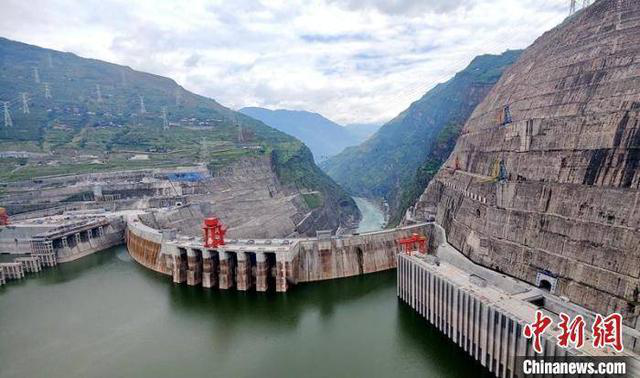
Baihetan Hydropower Station. [Photo/Chinanews.com]


BEIJING — A major part of China’s west-to-east power transmission program kicked off operation Friday, a further boost to the coordinated development among different regions.

With its transmission line stretching about 2,080 km, the Baihetan-Jiangsu 800-kilovolt ultra-high-voltage (UHV) direct current power transmission project transmits clean hydropower from the southwestern province of Sichuan to east China’s economic powerhouse Jiangsu province.

It is the world’s first UHV direct current power transmission project using a new approach that combines the conventional direct current and flexible direct current technologies, according to the State Grid Corporation of China.

Starting construction in December 2020, the mega project spans five provincial regions, with many parts built into the mountains.

“We have worked against high altitude, low temperatures and complex landscapes to meet the schedule,” said Zhang Mingdi, a project manager participating in the construction of the project’s Sichuan section.

China’s west-to-east power transmission program seeks to balance the country’s electricity supply and demand in different regions. It transmits the electricity surplus in western regions rich in power-generating resources to eastern regions which need much electricity to power economic activities.

Sichuan is home to the project’s powerhouse Baihetan, the world’s second-largest hydropower station. The Baihetan-Jiangsu project is expected to accelerate the transformation of Sichuan’s natural resources into economic benefits, bringing investment totaling about 100 billion yuan (about $14.92 billion) in electricity and other sectors.

The electricity market’s volume of Jiangsu, the power transmission’s major receiver, is expected to top 10 million kW during the 2021-2025 period.

The project has a power transmission capacity of 8 million kW, generally meeting the demand of Jiangsu’s power demand, said Wu Wei, vice director of the construction department of State Grid Jiangsu Electric Power Co., Ltd.

Some 14 million tonnes of coal could be saved thanks to the project, which can deliver more than 30 billion kWh of clean electricity annually, helping reduce carbon dioxide emissions by over 25 million tonnes every year.

https://www.wuhu.gov.cn/English/News/34921951.html

Anhui City Schedules Mass Testing to Curb Latest Outbreak


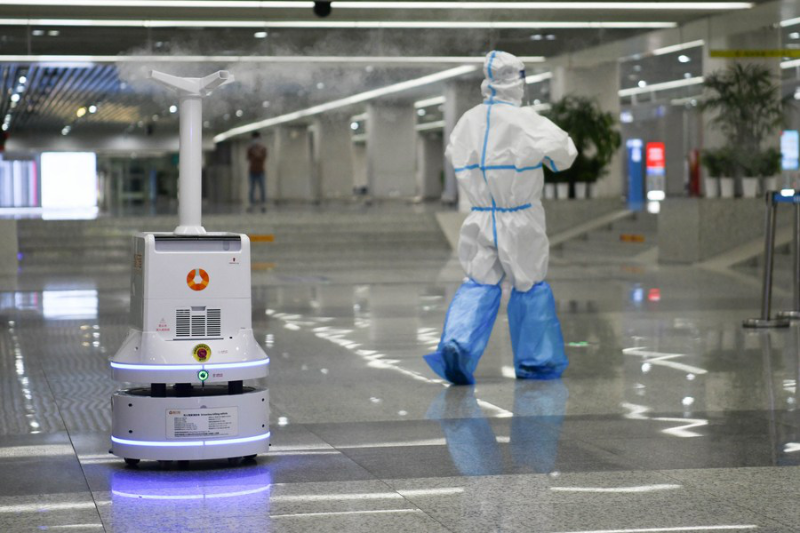
An unmanned disinfection device works in Hefei South Railway Station in Hefei, East China’s Anhui province, April 27, 2022. [Photo/Xinhua]


Suzhou in Anhui province, which has been hit hard by a COVID-19 outbreak, will conduct three more rounds of universal testing between Monday and Wednesday to detect each potential sufferer and strive for dynamic zero-COVID status at community level.

Between June 26 and the afternoon of July 4, the city’s Sixian county, the epicenter of the latest outbreak, has reported 863 positive cases, according to a Monday night news conference.

Notably, cases detected at the community level have declined after swift intervention.

“The epidemic prevention and control of Sixian is in the critical stage,” said Zheng Shanjie, Party secretary of Anhui. Residents from villages and communities with high risks of infections will be transferred to centralized quarantine facilities, he said.

Anhui reported 29 locally transmitted confirmed cases, all found in Sixian, and 258 new asymptomatic carriers in the city on Sunday.

The city’s epidemic prevention and control headquarters decided to adopt a tiered management mechanism for communities, according to a statement released on Sunday.

The mechanism would designate a chief responsible for each residential community, each building in the community and each unit in the building to improve community self-management.

The headquarters said in a statement on Monday morning it would launch a comprehensive investigation three days from Monday to discover potential work defects and people who missed the testing to make sure the goal of zero-COVID at the community level would be achieved as scheduled.

Officials and village cadres would be punished if they were found to hide or insufficiently trace infections for the communities and villages in their charge after investigation.

By Sunday night, 131 experts for patient treatment had been sent to Suzhou by central and provincial authorities and other cities of the province, in addition to 120 local medical workers.

Neighboring Jiangsu province reported 52 asymptomatic carriers on Sunday, with 34 in Wuxi and 16 in Xuzhou and the other two in Suzhou and Yancheng, according to the Jiangsu provincial health commission.

Wuxi suspended dine-in services at restaurants on Saturday. It also suspended the operation of intercity buses, scenic spots, shopping malls, supermarkets and basement gyms.

In Hefei, capital of Anhui, three asymptomatic carriers all related to Sixian had been reported on June 27 and 28, but no new cases have been found since.

The Hefei government announced on Sunday night it would conduct city-wide free mass testing every three days, with the latest one starting on Tuesday.

Previously, the city had been testing every five days until mid-June, as no cases had been reported for weeks at that time.

https://www.wuhu.gov.cn/English/News/34921931.html

Local Govts Step up to Boost Night Economy


*


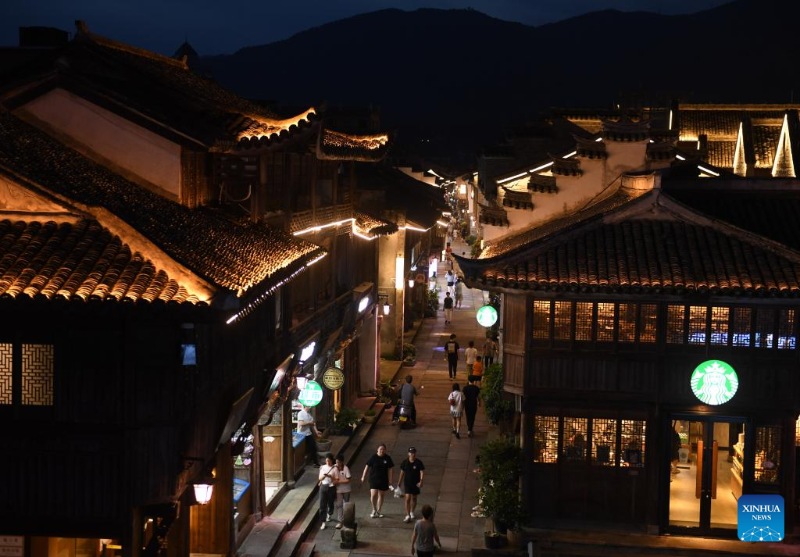
Tens of thousands of people crowded a culture and tourism area close to the Yangtze River in Wuhu, Anhui province, for an outdoor concert on Saturday night.

After the concert ended at around 9:30 pm, the night seemed to have just begun in Wuhu Old Town Block.

“After the free concert, many in the audience went to nearby restaurants and bars to continue enjoying the cheerful night,” said Cheng Pei, executive for activity planning at Huangshan Culture and Tourism, the company that runs the block.

Since late May or early June, with the easing of epidemic prevention and control measures, many local restaurants have extended their opening hours to 2 am.

In the neighboring city of Xuancheng, local authorities are considering holding similar activities regularly over the next three months.

After an inspection visit to a downtown street on June 19, the city’s Party chief and mayor led dozens of officials to a local barbecue restaurant for a casual dinner.

Kong Xiaohong, Party chief of Xuancheng, has asked local officials to attach greater importance to consumption in order to help boost the economy.

About 60 percent of Chinese consumption activities happen at night, while supermarket sales from 6 pm to 10 pm account for more than half of the day’s revenue, according to the Chinese Cities’ Night Economy Influence Report 2019 by Tencent.

Such visits by top local officials to boost consumption have also happened in other cities across the country.

The Party chief of Henan province’s Xinzheng city and deputy Party chief of the Guangxi Zhuang autonomous region’s Guilin city, led local officials to restaurants for dinner on the nights of June 7 and June 15.

Xuancheng statistics bureau’s data show sales revenue for the local catering sector declined by 10 percent in the first four months from the same period last year.

“Since May, the sector has been recovering steadily, though the latest performance still fell behind the same period before 2020,” said Shang Jianping, an official from the Xuancheng’s bureau of commerce.

Bai Ming, an expert with the Ministry of Commerce, said officials’ public support for the night economy showed that the fight against COVID-19 had been successful, so residents will consume more, according to a recent report by China News Service.

“Their visits would push related departments and officials to think about new measures to boost the sector,” Shang said.

His bureau organized a meeting on Friday that included local government departments and business owners, to prepare multiple support policies for the night economy.

For example, the local authorities are relaxing parking restrictions to make it easier for consumers to park.

As long as they do not affect traffic and safety, more street vendors would also be permitted, said Shang.

In late May, Shandong province required local tourism spots to offer no less than a 50 percent discount for entry tickets on workdays, support local catering shops during extended hours and provide more temporary streetside parking spaces.

https://www.wuhu.gov.cn/English/News/34922171.html

Sixteen Key Projects Have Been Settled in Wanzhi District,Totaling 10.088 Billion Yuan

Reporters learned that sixteen key projects with a total investment of 10.088 billion yuan in Wanzhi District have been signed recently, covering such fields as aerospace, home appliances for healthy living, intelligent equipment manufacturing, information technology, culture and education, and green food. The projects are of outstanding leadership, innovation and growth.

Since the beginning of this year, Wanzhi District has given more priority to leading characteristic industries and attracting large and strong investment, and accelerated the conversion and aggregation of factor resources into high-quality projects. More than 100 projects have been signed, including 40 projects of more than 100 million yuan, 7 projects of more than 2 billion yuan and 2 projects of 5 billion yuan.  

 Translated by Yuan Mengwen from Foreign Affairs Office of Wuhu Municipal People’s Government

https://www.wuhu.gov.cn/English/News/34768311.html

Wuhu Municipal Government Signed a Strategic Cooperation Framework Agreement with China Railway NO.4 Engineering Group

On June 16, Wuhu Municipal Government signed a strategic cooperation framework agreement with China Railway NO.4 Engineering Group. Ningbo, Deputy Secretary of CPC Wuhu Municipal Committee and Mayor; Liu Bo, secretary of CPC Committee and chairman of China Railway NO.4 Engineering Group; Zhang Dong, Yao Kai and Wang Zhipeng attended the signing ceremony.

According to the agreement, China Railway NO.4 Engineering Group will give full play to the advantages of the whole industrial chain and promote the concentration of relevant resources to Wuhu. The two sides will cooperate in supporting industries such as infrastructure construction, high-end equipment manufacturing, innovation and research base, orderly promote the establishment of advanced manufacturing and strategic emerging industries in Wuhu, and contribute to the high-quality development and quality construction of Wuhu. The two sides will also establish a system of regular high-level visits, meetings and consultations, actively implement cooperation and constantly push forward the development of bilateral strategic cooperative relations.

It is understood that China Railway NO.4 Engineering Group is the “benchmark” member of the world’s top 500 enterprises – China Railway Corporation Limited. It has successively undertaken the construction of major infrastructure projects such as Qinghai-Tibet Railway, Beijing-Shanghai High-speed Railway, Wuhu-Anqing section of The Expressway along the River, and Wuhu Yangtze River Bridge. In 2021, it ranks the first among the top 50 construction enterprises in Anhui Province.

 Translated by Yuan Mengwen from Foreign Affairs Office of Wuhu Municipal People’s Government

https://www.wuhu.gov.cn/English/News/34768371.html

Chinese, Iraqis Celebrate Dragon Boat Festival in Baghdad

BAGHDAD, June 4 (Xinhua) — The Iraqi-Chinese Friendship Association on Saturday held an event here to celebrate China’s traditional Dragon Boat Festival, as part of its efforts to promote cultural exchanges between the two countries.

Attended by Chinese Ambassador to Iraq Cui Wei as well as representatives of Chinese companies based in Iraq and the Iraqi government, the event included a show of Iraqi folk costumes and traditional Iraqi songs, and a presentation about the making of Zongzi, a traditional Chinese delicacy wrapped in bamboo or reed leaves for celebrating the festival.

“We wanted to convey the feeling of love and the Chinese folklore to the Iraqi people, and at the same time we conveyed Iraqi folklore to the Chinese people (in Baghdad),” Haider al-Rubeiy, head of the Iraqi-Chinese Friendship Association, told Xinhua during the celebration.

Al-Rubeiy also expressed his expectation that Iraqi public universities will make Chinese language learning available due to the importance of the Chinese language.

Wang Lizihao, an employee of the Shanghai Electric Group Co., LTD Iraq Branch, volunteered to teach Iraqis how to make zongzi during the event. “When I participated in the Dragon Boat Festival in Iraq, which is located thousands of miles away from my country, I felt warm,” he told Xinhua.

“I want the Iraqi people to understand what the Dragon Boat Festival is, why they eat Zongzi at the Dragon Boat Festival, and how to make it,” said Sajjad al-Qazaz, a young member of the friendship association, who works as a Chinese language teacher.

“I think we should increase cultural exchange activities so that more Iraqis can understand Chinese traditional culture, which is a great culture,” he said, noting the friendship between Iraq and China has a long and deep history.

https://www.wuhu.gov.cn/English/News/34586631.html

Three Achievements of Wuhu Encouraged by the State Council

On June 9th, the General Office of the State Council issued an announcement to inspect and encourage localities that made remarkable achievements in the implementation of relevant major policies and measures in 2021. It is learned that Wuhu was named and announced by the State Council in three achievements, receiving a great encouragement.

According to the contents of the announcement, Wuhu made three outstanding achievements in implementing relevant major policies and measures in 2021. First, Wuhu has made contributions to building China into a manufacturer of quality. Second, Wuhu has made effective progress in the protection of cultivated land and the economical and intensive use of land. Now, the city has a low proportion of idle land and a huge demand of land use. Third, great efforts have been made to adjust and transform the old industrial bases, and prominent achievements have been seen in supporting the transformation of traditional industries and promoting industrial transformation and upgrading.

To further promote the implementation of major decisions and plans of the CPC Central Committee and the State Council, fully stimulate and mobilize the enthusiasm, initiative and creativity of all localities to take responsibilities and start businesses, according to the Notice of the General Office of the State Council on Further Strengthening Inspection and Incentives under the New Situation, combined with the State Council’s accountability inspections, special inspection, Internet plus model of inspection and daily inspection of departments, with the approval of the State Council, 199 localities that achieved remarkable progress in 2021, such as winning the three critical battles against major risks, poverty, and pollution, deepening the reform of “streamlining administration and delegating power, improving regulation, and upgrading services”, optimizing the business environment, promoting innovation-driven development, expanding domestic demand, implementing the rural revitalization strategy, and safeguarding and improving people’s livelihood, will be inspected and encouraged, and 30 incentive and supporting measures will be taken accordingly.

 Translated by Wang Mengxiao from Foreign Affairs Office of Wuhu Municipal People’s Government

https://www.wuhu.gov.cn/English/News/34768271.html

China’s Space Station to Serve Scientific Research as Versatile Lab

JIUQUAN, June 4 (Xinhua) — China’s Tiangong space station, designed to be a versatile space lab, is capable of accommodating 25 experiment cabinets for scientific exploration, announced the China Manned Space Agency on Saturday.

“Each cabinet is a small-sized lab in space, capable of supporting single subject or interdisciplinary research in space science experiments,” said Lin Xiqiang, deputy director of the agency, at a press conference.

During the construction phase of the space station, nearly 100 experimental research projects have been planned, Lin said.

China is set to launch the Shenzhou-14 crewed spacecraft on Sunday from the Jiuquan Satellite Launch Center, sending three astronauts to its space station combination for a six-month mission.

The Shenzhou-14 mission marks the final phase of construction for the Tiangong space station. The Wentian lab module will be launched in July, and the Mengtian lab module will be launched in October.

According to Lin, the experiment cabinets installed on Wentian can support experiments on life and ecology, biotechnology, and varying-gravity science research.

They can also be used in the response mechanism research on the growth, development, heredity and aging of plants, animals and microorganisms, as well as the research on closed ecosystems.

Astronauts can conduct multi-level biological experiments on molecules, cells, tissues and organs in Wentian by using diverse online detection methods, such as by visible light, fluorescence or microscopic imaging.

Wentian can also provide a variable gravity simulation environment to support the comparative study of the biological growth mechanism in different gravity conditions.

The Mengtian lab module will mainly support microgravity research, with experiment cabinets for the study of physics of fluids, material science, combustion science and basic physics. It also has cabinets for space technology experiments, Lin said.

Meanwhile, a space-based cold atomic clock system will be established in Mengtian.

Consisting of a hydrogen clock, a rubidium clock and an optical clock, the cold atomic clocks will form the most precise time and frequency system in space. It will serve the gravitational redshift research, measurement of fine structure constants, and other applications.

After the space station is put into normal operation, large-scale scientific research will also be carried out to promote breakthroughs in major cutting-edge scientific fields, such as the dark matter and dark energy, galaxy formation and evolution, nature of materials and life, variation law of human’s response in space, as well as the sustainable development of Earth, Lin said.

They are expected to accumulate profound sci-tech experience for China to carry out further manned space exploration, he added.

https://www.wuhu.gov.cn/English/News/34586591.html