Skip to contentSkip to left sidebar Skip to footer

Author: WuhuW

China Raises Student Loan Ceiling

BEIJING — China raised its state loan ceiling for students by 4,000 yuan (around $620.2), said the Ministry of Finance on Sept 14.


Undergraduates can borrow up to 12,000 yuan annually in state loans while graduate students can borrow up to 16,000 yuan annually, Assistant Finance Minister Ou Wenhan told a press briefing.


Previous limits were 8,000 yuan and 12,000 yuan, respectively.


In the latest adjustment, students can use the loans to cover their living expenses after paying off their tuition and dormitory fees, said the official.


Launched in 1999, the student loan scheme aims to help financially disadvantaged students pursue their academic ambitions, part of China’s efforts to block the intergenerational transmission of poverty and improve equity in education, said Ou.


Interest rates for student loans are 30 basis points below the Loan Prime Rate (LPR) — a market-based benchmark lending rate — of the same class and same term, said the official.


Students do not need to repay the debt during their years of study, and the government covers the interest generated in this period. The maximum loan term is 22 years.


So far, the scheme has issued loans of more than 300 billion yuan and benefited more than 15 million students across the country, said the assistant finance minister.


China last raised the state loan cap for students in 2014. New measures took effect from the autumn semester in 2021.


China’s financial aid package for college students consists of scholarships, grants, work-study programs, subsidies, and tuition waivers in addition to loans.

https://www.wuhu.gov.cn/English/News/32007771.html

Philosophy of Green Growth Has Taken Root

Saihanba epitomizes efforts to improve environment, says former UN official


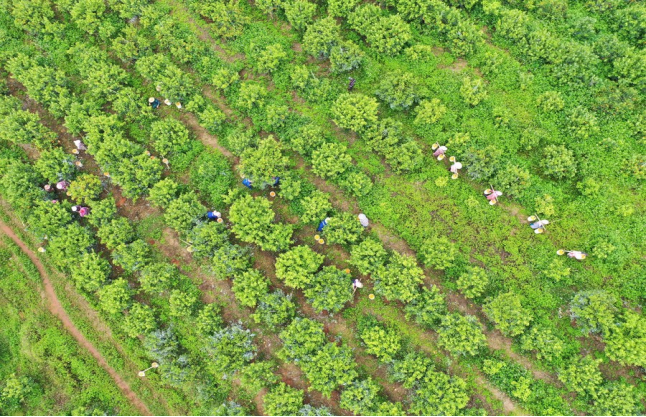
Saihanba, the world’s largest cultivated forest, was in the spotlight again when President Xi Jinping hailed it as an example of the global history of ecological progress during his recent inspection tour of Hebei province.


Xi, who is also general secretary of the Communist Party of China Central Committee, made the remark in August during an inspection tour to the Saihanba Forest Farm, which has undergone a green miracle over the past six decades as it was changed from a near desert to a sea of trees.


Monique Barbut, former executive secretary of the United Nations Convention to Combat Desertification, said the miraculous transformation of Saihanba epitomizes the country’s efforts to improve the environment and protect its ecosystems. “It also revealed the central government’s determination to adhere to the path of green development,” Barbut said in a recent interview with China Daily.


Since 2012, the development of ecological civilization, a concept that aims to promote green development, has gained greater momentum as the idea that “lucid waters and lush mountains are invaluable assets”, conceptualized by Xi, has taken root across the country.


Barbut said the theory goes “very well” with the idea behind ecosystem conservation, rehabilitation of degraded land to improve livelihoods and the environment, and land degradation neutrality.


“We must never destroy nature (in order) to develop. If we do the right things, in the right places on the right scale, we can live in harmony with nature and still achieve remarkable growth,” she said.


The forest farm, located around 400 kilometers north of Beijing, covers about 70,000 hectares. In the 1950s, the region was a wasteland due to rampant logging, which resulted in the Chinese capital and adjacent regions being frequently hit by sandstorms.


To stop rapid desertification, a group of 369 foresters from 18 provinces was established in 1962. Thanks to the ongoing efforts of generations of Saihanba foresters, forest coverage in the region has increased from 11.4 percent in the early 1960s to 80 percent today.


The woodland also acts as an important environmental shield and green lung for Beijing and neighboring regions.


Saihanba was given a Champion of the Earth Award, the highest honor of the United Nations Environment Program, at the third UN Environment Assembly in Nairobi in December 2017.


During his visit, Xi called for further progress in developing the green economy and ecological conservation and praised the spirit of the foresters, which is regarded as a leading example of the nation’s efforts to advance ecological conservation.


He also spoke of the hardworking spirit the foresters demonstrated in planting the forest, saying it is part of the spirit of the Communist Party of China to struggle for success.


Grand goal


In the report delivered at the 18th CPC National Congress in 2012, ecological development was included as a major task in the country’s overall plan and building a “beautiful China” was proposed as a grand goal for ecological progress.


Eco-civilization was also included in the CPC Constitution as a development principle during the meeting. It was the first time in the world a ruling party had highlighted green development in its guidelines.


Under the principle, the country is now speeding up the establishment of a national territory spatial planning system, with the ecological protection the priority of three “red lines” that will guide construction.


Xi’s philosophy for green development is changing China.


China has raised its area of forest coverage from 12 percent in the early 1980s to 23.04 percent in 2020, with its forest stock volume hitting 17.56 billion cubic meters, according to the National Forestry and Grassland Administration.


The per capita green area in China’s urban areas averages 14.8 square meters and 441 cities have joined in a campaign to build national forest cities through multiple greening methods.


The country also initiated its first pilot program to establish grassland nature parks last year, with 39 pilot projects covering a total of 147,000 hectares of grassland in 11 provinces and autonomous regions.


At a recent news conference, an official from the administration said that vigorous measures will be taken by China’s forestry authorities, such as expanding grassland and forests, to fulfill the country’s climate commitment to peak carbon dioxide emissions before 2030 and achieve carbon neutrality before 2060.


In the next five years, forest coverage in China will hit 24.1 percent and the country’s forest stock volume will reach 19 billion cubic meters, according to Zhang Wei, director of the administration’s environment protection and restoration department.


“We will build a conservation system on nature reserves, protect various natural resources and maintain a strong attitude toward illegal activities that will harm nature,” Zhang said.


Apart from that, the administration will also promote carbon trading in the future and aim to build a trading platform, encouraging the participation of capital from nongovernment sectors, including enterprises and social organizations.


“China has promoted its own approach to climate governance that highlights green recovery. The forestry department at all levels will play to our advantage and strengthen our green industries, further contributing to our commitment to climate change,” said Li Chunliang, deputy director of the administration.

https://www.wuhu.gov.cn/English/News/32007711.html

Vice Governor He Shushan Inspected Conch Group in Wuhu

On September 14, vice governor He Shushan led his delegation to Conch Group for inspection and discussion. Wang Chunming, deputy secretary-general of Anhui provincial government, Niu Nutao, director of Anhui provincial Economic and information Department, Ning Bo and Yao Kai, mayor and vice mayor of Wuhu, attended the seminar.

At the seminar, after listening to the report by Wang Cheng, secretary of the Party committee and president of Conch Group, on enterprise operation, innovation and development, carbon reduction, and the construction of industrial internet, He Shushan gave full recognition to the achievements made by Conch since the launch of the 13th Five-Year Plan, and offered guiding opinions on the future development of the enterprise. He stressed that innovation should be regarded as the core driving force of high-quality development, and the role of industrial internet should be brought into full play, so as to accelerate the digital transformation and upgrading of industries, and further improve the vitality and management capacity of the enterprise. To help achieve carbon peak and neutrality goals, carbon emission and energy consumption should be reduced from the root, continuously promoting technological innovation of energy conservation and carbon reduction. In addition, the utilization of carbon dioxide should be enhanced. The enterprise should make efforts in product innovation, and focus on the new development trend of “manufacturing industry plus the tertiary industry” and the new energy and materials, taking the path of green, low-carbon and sustainable development.

Ning Bo said that Conch has been among the top 500 in the world with the development and prosperity of Wuhu, which is a highlight for Wuhu’s economic growth. Wuhu Municipal Party Committee and Municipal Government will continue to provide services and support for the development of Conch. We hope that Conch Group will speed up the advancement focusing on Wuhu’s leading industries, make good use of capital, explore the potential of itself, extend producer services to the high end of the value chain, and cultivate a number of listed enterprises to stay in Wuhu, making greater contributions to local economic and social development.

During the inspection, He Shushan also visited New Energy Control Center and Cement Production Center to learn about the layout of Conch Group’s new energy industry, its development status and the construction of the industrial internet platform. 

Translated by Wang Mengxiao from Foreign Affairs Office of Wuhu Municipal People’s Government

https://www.wuhu.gov.cn/English/News/32039921.html

Management Regulations for After-school Tutoring Issued

China has issued a management regulation for people working at after-school tutoring institutions to better regulate the institutions.


The regulation, jointly issued Tuesday by the Ministry of Education and Ministry of Human Resources and Social Security, said tutors for academic subjects should have teaching credentials, while those for non-academic subjects should have relevant professional qualifications.


No teachers at kindergartens and primary and secondary schools should work at tutoring institutions, the regulation said.


The number of full-time tutors and researchers should account for more than 50 percent of all people employed by the institutions, it said.


Tutoring institution employees should support the Party’s leadership and socialism with Chinese characteristics, abide by laws and regulations, and have good morality and professional ethics, the regulation stipulated.


The regulation also included “red lines” for the employees, including violating Party’s policies, disseminating wrong information and views in classes or online, engaging in inappropriate relationships with students, discriminating against or abusing students, using drugs or engaging in other criminal activities, it said.


People violating the regulation should be fired by tutoring institutions and those with serious misconduct will be included in the national blacklists for tutors, it added.


https://www.wuhu.gov.cn/English/News/32007671.html

China Resumes Major Expos’ Offline Events to Boost Trade, Economic Recovery

BEIJING, Sept. 14 (Xinhua) — After going virtual on three occasions due to the impact of COVID-19, China’s renowned Canton Fair is returning to the physical world with a resumption of offline activities.


Scheduled for next month in south China’s Guangdong Province, the 130th session of the China Import and Export Fair will be held both online and offline, Vice Minister of Commerce Ren Hongbin told a press conference Tuesday.


The upcoming session will be a milestone, as it marks the return of offline exhibitions at all major expos across the country, signaling new progress in China’s efforts to coordinate epidemic control with economic and social development, said Chu Shijia, head of the China Foreign Trade Center, one of the fair’s organizers.


Amid routine measures to block the spread of the virus, China has been actively promoting large-scale international trade fairs as platforms to propel trade growth and support businesses around the world.


The 2021 China International Fair for Trade in Services (CIFTIS), which just concluded in Beijing, attracted representatives from 153 countries and regions, with more than 1,000 deals secured.


The event also saw the announcement of the country’s new opening-up measures in the services sector, including implementing a negative list for cross-border services trade and exploring the development of national demonstration zones for the innovative development of trade in services.


The CIFTIS is China’s solution for connecting with the international market and engaging in international cooperation, which is of great significance to the rebounding of trade in services and the recovery of the world economy, said Li Jun, director with the Institute of International Trade in Services under the Ministry of Commerce.


The country is also making solid preparations for the import-themed expo in Shanghai, which has been held successfully on three previous occasions and became a channel for global brands to tap the gigantic consumer market in China.


The Canton Fair, with a history dating back to 1957, has long been seen as a barometer of China’s foreign trade. Last year, when the pandemic disrupted global trade activities, the fair played an especially important role in shoring up trade growth and supporting the worst-hit small businesses around the world.


The online form was proven efficient, with a record number of products on display during the last session of the fair in April.


The upcoming session will continue to give full play to the low-cost and high-efficiency nature of online exhibitions, while resuming the offline displays to help global buyers and vendors to better connect with each other, Ren said.


The event will last five days and feature only one phase, as opposed to the three phases of previous sessions, in view of the current epidemic control situation. The offline exhibition will cover an area of 400,000 square meters, while 60,000 online booths will be set up for the virtual event, he added.


The latest data from the General Administration of Customs shows that China’s foreign trade sustained growth momentum in the first eight months of the year, with exports surging 23.2 percent and imports jumping 24.4 percent year on year.


The country is confident of achieving the target of maintaining stable trade growth while enhancing trade quality for the year 2021, Ren said, cautioning that small and medium-sized trade firms in the country still face challenges from rising costs, an issue that will be addressed with targeted policies.

https://www.wuhu.gov.cn/English/News/32007601.html

The 5th Provincial Industrial Robot Technology Application Skills Competition Was Held in Wuhu

On September 10, The 5th Industrial robot Technology Application Skills Competition of Anhui Province, which lasted for three days,  came to an end in Wuhu. Wang Dengming, deputy director and member of the Provincial Department of Economy and Information Technology, Yao Kai, deputy mayor, Zheng Lanrong, deputy secretary of the Anhui Provincial Committee of the Communist Youth League, Cai Xiaoli, member of the Party Leadership Group and vice chairman of the Provincial Women’s Federation, Wang Jian, second-level inspector of the Provincial Federation of Trade Unions, Gao Wu,deputy secretary of the party committee and principal of Wuhu Vocational and Technical College, attended the closing ceremony.

The competition is divided into three groups, includin staff, teachers and students. More than 180 contestants from the whole province signed up, and the number of contestants reached a record high. After theoretical examination and practical operation, 9 first prize winners, 12 second prize winners and 15 third prize winners were determined. 13 excellent organization prizes were awarded in the competition.

This competition fully implements the spirit of the relevant documents of the provincial government on supporting the construction of a strong manufacturing province, the construction of a large technical and industrial province, and the development of the robotics industry. It is an important platform for the “investment attraction and talent introduction” work of the high-end equipment manufacturing industry.

Translated by Yuan Mengwen from Foreign Affairs Office of Wuhu Municipal People’s Government

https://www.wuhu.gov.cn/English/News/32007901.html

Five Enterprises in Wuhu Won Gold Medals in Provincial Patent Award Selection

Recently, results of the eighth patent award selection in Anhui Province were announced, with a total of 45 patents in Wuhu, ranking the second in the province. Among them, Wuhu Midea Kitchen Appliance Manufacturing Co., LTD., Efort Intelligent Equipment Co., LTD., Chery Automobile Co., LTD., State-owned Wuhu Machinery Factory, Anhui San ‘an Photoelectric Co., Ltd. won gold medals.


In recent years, Wuhu has continuously optimized the policy system, strengthened the guidance services for enterprises, revised and improved the subsidy and reward policies for patents and trademarks, increased patent protection, strengthened the application of achievements, and significant progress has been made in protecting the creation and use of intellectual property rights. According to the statistics, in the first half of this year, the number of invention patents authorized in Wuhu was 1,598, with a year-on-year increase of 31.8%, and the number of PCT applications was 23, with a year-on-year increase of 64.2%. The number of effective invention patents owned by every 10,000 people reached 47.2, continuing to remain the first in the province. There were 16,379 trademark applications in Wuhu and 2,324 registered trademarks owned by market entities per 10,000 households, ranking first in the province.

Translated by Yuan Mengwen from Foreign Affairs Office of Wuhu Municipal People’s Government

https://www.wuhu.gov.cn/English/News/31696001.html

Companies Seek More Incentives to Boost Industry

The business logistics sector has undergone tremendous growth in China in recent years, and its rapid development has made lives easier while effectively boosting economic growth.


However, there are still obstacles hampering the sector’s development. Many businesses, particularly in small cities, are seeking more incentives to help facilitate logistics in areas such as cross-border trading, and bring down their costs.


Wang Weidong, an official in charge of cross-border e-commerce in Shushan district of Hefei, capital of Anhui province, said that the volume of such business in the city has grown significantly in recent years.


However, Hefei’s international air cargo capacity is not sufficient. In fact, the only international cargo flight available in the provincial capital is one that operates twice a week to Chicago in the United States.


There is no air cargo agency in Hefei and this complicates matters for local companies who need to get their goods on the outbound flights to Chicago, which originate in Shanghai. By the time they arrive in Hefei, there’s little cargo space left.


To get around this problem, some companies send their goods to Shanghai to get them on the flights before they arrive in Hefei, but doing so adds to operational costs.


Zheng Haitao, owner of an e-commerce business in Shushan, said that the lack of air cargo space is a sore point in Hefei.


“The space for goods on the flights is extremely limited, and the pricing is not transparent,” he said.


Wang said the government is working hard to tackle the issue and enhance the provincial capital’s international cargo capacity.


“Without solid infrastructure, it will be harder to formulate market competitiveness for these logistics businesses,” he said.


A new national action plan announced in a guideline earlier this month promotes efforts to facilitate international logistics. The plan made it clear that efficiency will be improved by improving global logistics channels and easing customs clearance for cross-border trade, highlighting the vital role that business logistics plays in connecting domestic and global markets.


Some local businesses are also striving to make the process more intelligent, a direction included in the new action plan.


In 2013, Wang Jun started Wuhu Jiuheng Packaging Technology, a pallet production business in the province’s Wuhu city.


The company originally started off making ordinary wood pallets. Now, the pallets are equipped with chips, which enable businesses across the entire logistics chain to track the status of shipped goods.


Wang Yong, a professor at the KTH Royal Institute of Technology in Sweden, said that although the development of logistics infrastructure and networks in China remains uneven, the process is becoming increasingly intelligent.


While the demand for business logistics is expanding rapidly, the country still lacks modern businesses with a competitive edge, he said, adding that the sector needs to become more environmental friendly.

https://www.wuhu.gov.cn/English/News/31695671.html

China’s Vision and Pursuit of Common Prosperity

Aerial photo taken on March 24, 2020 shows farmers harvesting oranges in Liangqing District of Nanning, capital of south China’s Guangxi Zhuang Autonomous Region.(Xinhua/Zhou Hua)

BEIJING, Aug. 23 (Xinhua) — While embarking on the journey of comprehensively building a modern socialist country, China has envisioned a future where prosperity is shared by everyone in the country.

The term “common prosperity” has been brought up several times in key official documents recently. After listing progress in common prosperity in its 14th Five-Year Plan (2021-2025), the country’s leadership stressed the need to pursue it and expounded on the term in a meeting last week, bringing it under the spotlight.

What is common prosperity? Why does China emphasize it? How will the country achieve it? Here are some explanations.

— What is common prosperity?

Common prosperity refers to affluence shared by everyone both in material and cultural terms, and should be advanced step by step, said the meeting on financial and economic affairs.

In particular, it emphasized that such prosperity does not cover only a few people or parts of the country.

Rather than being egalitarian at the expense of efficiency, common prosperity should be attained through hard work and innovation, with chances for more people to become wealthy.

— Why does China emphasize common prosperity?

Common prosperity is an essential requirement of socialism and a key feature of Chinese-style modernization, according to the meeting.

Since the 18th National Congress of the Communist Party of China in 2012, the country has gradually put common prosperity in a more prominent position. Now, with victory in the anti-poverty fight and the completion of the building of a moderately prosperous society in all respects, China has favorable conditions for promoting common prosperity.

The goal is also vital to improving people’s well-being. As China marches toward its second centenary goal, the focus of promoting people’s well-being entails boosting common prosperity, said the meeting.

— How will the country achieve it?

To achieve the goal, China vows to establish a scientific public policy system and a reasonable distribution system that benefits everyone. There is a focus on primary and inclusive projects that facilitate people’s well-being and guarantee their basic needs.

Highlighting the importance of appropriately dealing with the relationship between efficiency and fairness, the country plans to make basic institutional arrangements on income distribution. It also plans to expand the size of the middle-income group and adjust excessive incomes to promote social fairness and justice.

Other planned measures include protecting property rights and intellectual property rights, the healthy development of different types of capital, and the advancement of common prosperity among farmers and in rural areas, the meeting said.

Actions are already underway. According to a guideline unveiled in June, Zhejiang Province, an economic powerhouse, has been designated as a demonstration zone for promoting common prosperity.

Under the guideline, the province will strive to grow its per capita gross domestic product (GDP) to the level of moderately developed economies by 2025 and basically achieve common prosperity by 2035, with its per capita GDP and the income of urban and rural residents reaching the standard for developed countries.

https://www.wuhu.gov.cn/English/News/31695661.html

Chinese Economy on Stable Track Despite Challenges

BEIJING — China’s economy maintained its recovery streak in July, despite challenges posed by the resurgence of COVID-19, extreme weather and external uncertainties.


China’s industrial production continued its expansion, with the value-added industrial output, which measures factory activities, rising 6.4 percent year-on-year in July, according to the National Bureau of Statistics (NBS).


The figure was up 11.5 percent from July 2019, bringing the average growth for the past two years to 5.6 percent, NBS data shows.


During the January-July period, China’s fixed-asset investment increased 10.3 percent year-on-year, with the average growth rate over the last two years at 4.3 percent.


The country’s retail sales of consumer goods climbed 8.5 percent year-on-year in July, resulting in an average growth of 3.6 percent over the past two years.


Floods and the resurgence of COVID-19 restrained industrial production to a certain extent, while the resumption of quarantine measures in some regions affected the recovery of consumption related to tourism, catering and other services, said Wen Bin, chief analyst at China Minsheng Bank.


In general, the cumulative growth rate of major macroeconomic indicators remained at a reasonable level, although growth in some areas of the consumption and services sectors slowed last month due to high temperatures, heavy rainfalls and sporadic COVID-19 outbreaks, said NBS spokesperson Fu Linghui.


China’s job market also remained generally stable last month thanks to increasing demand for labor and flexible job opportunities, as well as favorable policies that stabilize employment and assist college graduates and migrant workers, said Fu.


In July, the surveyed unemployment rate in urban areas was 5.1 percent, up 0.1 percentage points from June, but lower than the rates registered in the same period in 2020 and 2019.


In the first seven months of 2021, China created a total of 8.22 million new urban jobs, achieving 74.7 percent of its annual target, NBS data shows.


Fu expects China’s economy to continue its steady recovery in the second half of the year, with major macro indicators remaining within a reasonable range and the quality of development further improved.


Fu is optimistic about the country’s future consumption. The expansion of vaccination campaigns and targeted COVID-19 prevention and control measures will stabilize the market, while the increased job opportunities and household incomes will drive up consumption, he said.


In terms of industrial production, Fu highlighted the fast expansion of China’s high-tech manufacturing sector against the backdrop of the country’s increasing resilience in innovation-driven development.


In July, the sector’s output expanded 15.6 percent from the same period last year, resulting in an average growth of 12.7 percent over the last two years.


Cautioning that there are increased uncertainties in global economic resumption and challenges to domestic economic recovery, Fu said that measures will be taken to implement the cross-cycle adjustment of macro policies, tap into the potential of the domestic market, and keep the economy operating within an appropriate range.


More efforts should be made to boost domestic demand further, improve the role of infrastructure investment in stabilizing investment and growth, and ramp up support for manufacturing, micro-, small- and middle-sized enterprises, as well as inclusive and green finance, Wen said.

https://www.wuhu.gov.cn/English/News/31651771.html